
Slipped Disc (Bulging or Herniated Disc)
Assessment and non-surgical treatment for slipped discs and sciatica at Hampshire Spine & Joint Clinic near Andover.
What Is Slipped Disc?
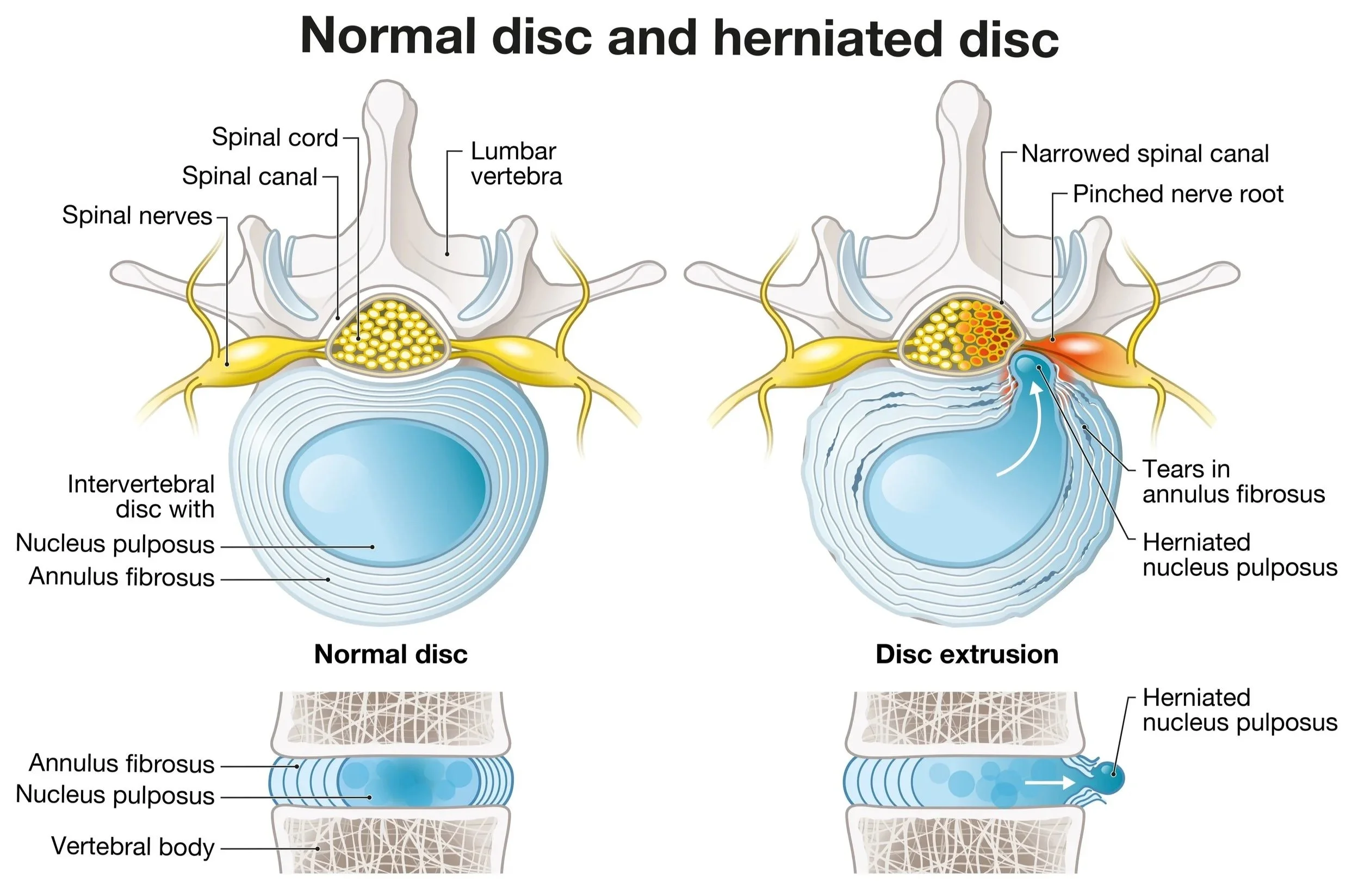
The spine is made up of a series of bones called vertebrae. Between each vertebra sits an intervertebral disc, which acts as a shock absorber and allows the spine to move.
Each disc has two main parts:
• A strong outer ring called the annulus fibrosus
• A soft gel-like centre called the nucleus pulposus
When the outer layer weakens or tears, the inner material may bulge outward. This is often referred to as:
• a bulging disc
• a disc prolapse
• a herniated disc
If the disc presses on a nearby nerve root, it may cause sciatica, where pain travels down the buttock and leg.
Common Symptoms
Symptoms can vary depending on the size and position of the disc injury. Some people have minimal symptoms, while others experience severe nerve pain.
Common symptoms include:
• Lower back pain
• Pain radiating into the buttock or leg (sciatica)
• Tingling or pins and needles in the leg or foot
• Numbness in the leg or foot
• Muscle weakness
• Pain that worsens when sitting, bending, coughing or sneezing
In many cases, symptoms are worse when sitting because this increases pressure inside the disc.
Causes and Risk Factors
Disc injuries often develop due to a combination of mechanical stress and age-related changes in the spine.
Common contributing factors include:
• Heavy lifting
• Repetitive bending or twisting
• Prolonged sitting
• Poor posture
• Sudden lifting injuries
• Age-related disc degeneration
• Reduced core strength
Disc problems most commonly occur in adults between 30 and 60 years of age.
How Common Is It?
Disc bulges and degeneration are extremely common.
MRI studies show that many people develop disc changes with age, even if they have no symptoms.
However, when a disc irritates or compresses a nerve root, it can lead to significant pain and disability. Disc herniation is one of the most frequent causes of sciatica in the UK.
Diagnosis
Diagnosis usually begins with a detailed clinical assessment.
At Hampshire Spine & Joint Clinic this includes:
• A full history of symptoms
• Assessment of spinal movement
• Neurological testing
• Orthopaedic tests such as the Straight Leg Raise (SLR) or slump test
If symptoms persist or are severe, MRI scanning may be recommended to confirm the diagnosis and identify the level of disc injury. We are a partner clinic with Vista Diagnostics, and quickly arrange a scan for you.
Imaging can also help determine whether treatments such as IDD spinal decompression therapy may be appropriate.
Treatment Options
Most slipped discs improve without surgery.
Treatment usually focuses on reducing pain, relieving nerve irritation, and helping the spine recover.
Osteopathy
Osteopathic treatment aims to improve spinal movement and reduce muscle tension.
Treatment may include:
• gentle spinal mobilisation
• soft tissue treatment
• movement and posture advice
Rehabilitation
Specific exercises can help stabilise the spine and reduce the risk of recurrence.
Rehabilitation may focus on:
• core strength
• spinal mobility
• gradual return to activity
IDD Therapy Spinal Decompression
For patients with persistent symptoms, IDD Therapy may be recommended.
IDD Therapy is an advanced form of non-surgical spinal decompression that gently stretches the spine in a controlled way.
The aim is to:
• reduce pressure inside the disc
• relieve nerve compression
• improve disc hydration and healing
IDD Therapy is commonly used for conditions such as:
• disc herniation
• disc bulges
• degenerative discs
• sciatica
When Should You Seek Professional Help?
You should consider professional assessment if you experience:
• severe lower back pain
• pain travelling down the leg
• numbness or tingling in the leg or foot
• symptoms lasting more than a few weeks
• pain interfering with work, sleep, or daily activities
Urgent medical attention is required if symptoms include:
• loss of bladder or bowel control
• numbness around the saddle area
• progressive leg weakness
These may indicate cauda equina syndrome, which requires immediate medical care.
FAQs
Can a slipped disc heal on its own?
Yes. Many slipped discs improve gradually with conservative treatment and time.
How long does recovery take?
Recovery varies. Some people improve within a few weeks, while others may take several months.
Is exercise safe with a slipped disc?
Gentle movement is usually beneficial. However, exercises should be guided by a healthcare professional to avoid aggravating symptoms.
Do all slipped discs cause sciatica?
No. Some disc bulges do not affect nearby nerves and may cause only local back pain or no symptoms at all.
Will I need surgery?
Most people with a slipped disc recover without surgery. Surgical treatment is usually only considered if symptoms are severe or persistent.
Summary
A slipped disc is a common cause of back pain and sciatica. Although symptoms can be severe, most cases improve with appropriate conservative treatment.
Early assessment can help identify the underlying cause of symptoms and guide the most appropriate treatment plan.
If you are experiencing persistent back pain or sciatica, a professional assessment can help you understand your condition and explore suitable treatment options.
At Hampshire Spine & Joint Clinic near Andover, we offer osteopathy, rehabilitation, and advanced spinal decompression treatments such as IDD Therapy to support recovery from disc-related spinal conditions.


Book an appointment.
You can book an appointment online or call 01264 580280 if you would like to discuss your condition beforehand.
