

Sciatica
Understanding symptoms, causes and treatment for sciatic nerve pain near Andover, Hampshire.
Sciatica is a common condition that causes pain travelling from the lower back down the leg. The pain occurs when the sciatic nerve, the largest nerve in the body, becomes irritated or compressed.
Symptoms can range from mild discomfort to severe nerve pain affecting the buttock, thigh, calf or foot.
At Hampshire Spine & Joint Clinic near Andover, we regularly assess and treat patients with sciatica using a combination of osteopathy, rehabilitation, and advanced treatments such as IDD spinal decompression therapy.
What Is Sciatica?
Sciatica is not a condition in itself but a set of symptoms caused by irritation of the sciatic nerve.
The sciatic nerve originates from several nerve roots in the lower spine and travels through the buttock and down the back of the leg.
When one of these nerve roots becomes compressed or inflamed, pain can travel along the course of the nerve. This is known as sciatica or sciatic nerve pain.
The most common cause is a slipped or bulging disc in the lower back, although other spinal conditions can also affect the nerve.
Common Symptoms
Sciatica usually affects one side of the body and may include:
• Lower back pain
• Pain travelling into the buttock
• Shooting pain down the leg
• Tingling or pins and needles in the leg or foot
• Numbness in part of the leg or foot
• Muscle weakness in the leg
• Pain that worsens when sitting
Many patients describe the pain as sharp, burning, or electric.
Causes and Risk Factors
Sciatica occurs when a nerve root in the lower spine becomes irritated or compressed.
Common causes include:
• Slipped or herniated disc
• Bulging disc
• Degenerative disc disease
• Spinal stenosis
• Facet joint irritation
• Muscle tightness around the spine or pelvis
Risk factors include:
• prolonged sitting
• heavy lifting
• poor posture
• reduced core strength
• age-related changes in the spine
How Common Is Sciatica?
Sciatica is very common and affects millions of people worldwide.
Many episodes improve within several weeks, but some people develop persistent or recurrent nerve pain that requires professional treatment.
Sciatica is one of the most frequent reasons patients seek help for lower back and leg pain.
Diagnosis
Diagnosis usually begins with a detailed clinical assessment.
At Hampshire Spine & Joint Clinic this may include:
• review of symptoms
• assessment of spinal movement
• neurological testing
• orthopaedic tests such as the Straight Leg Raise (SLR) or slump test
If symptoms persist or are severe, MRI scanning may be recommended to confirm the diagnosis and identify the level of disc injury. We are a partner clinic with Vista Diagnostics, and quickly arrange a scan for you.
Imaging can also help determine whether treatments such as IDD spinal decompression therapy may be appropriate.
Treatment Options
Most cases of sciatica improve with conservative treatment.
Management aims to reduce nerve irritation, restore movement and support recovery.
Osteopathy
Osteopathic treatment aims to improve spinal movement and reduce muscle tension.
Treatment may include:
• gentle spinal mobilisation
• soft tissue treatment
• movement and posture advice
Rehabilitation
Specific exercises can help stabilise the spine and reduce the risk of recurrence.
Rehabilitation may focus on:
• core strength
• spinal mobility
• gradual return to activity
IDD Therapy Spinal Decompression
For patients with persistent symptoms, IDD Therapy may be recommended.
IDD Therapy is an advanced form of non-surgical spinal decompression that gently stretches the spine in a controlled way.
The aim is to:
• reduce pressure inside the disc
• relieve nerve compression
• improve disc hydration and healing
IDD Therapy is commonly used for conditions such as:
• disc herniation
• disc bulges
• degenerative discs
• sciatica
When Should You Seek Professional Help?
You should consider professional assessment if you experience:
• severe lower back pain
• pain travelling down the leg
• numbness or tingling in the leg or foot
• symptoms lasting more than a few weeks
• pain interfering with work, sleep, or daily activities
Urgent medical attention is required if symptoms include:
• loss of bladder or bowel control
• numbness around the saddle area
• progressive leg weakness
These may indicate cauda equina syndrome, which requires immediate medical care.
FAQs
Can sciatica go away on its own?
Yes. Many episodes improve gradually over several weeks, although some people develop longer-lasting symptoms.
Is walking good for sciatica?
Gentle walking is often helpful because it keeps the spine moving and promotes circulation.
What is the fastest way to relieve sciatica?
Treatment typically focuses on reducing nerve irritation through manual therapy, targeted exercises and activity modification.
Does a slipped disc always cause sciatica?
No. Some disc bulges do not irritate nearby nerves and may cause only local back pain.
Will I need surgery?
Most people recover without surgery. Surgical treatment is usually considered only if symptoms are severe or persistent.
Summary
Sciatica is a common cause of leg pain originating from irritation of the sciatic nerve in the lower back.
Although symptoms can be severe, most cases improve with appropriate conservative treatment.
If you are experiencing persistent back or leg pain, a professional assessment can help identify the cause and guide the most appropriate treatment.
Hampshire Spine & Joint Clinic near Andover, we offer osteopathy, rehabilitation, and advanced spinal decompression treatments such as IDD Therapy to support recovery from disc-related spinal conditions.

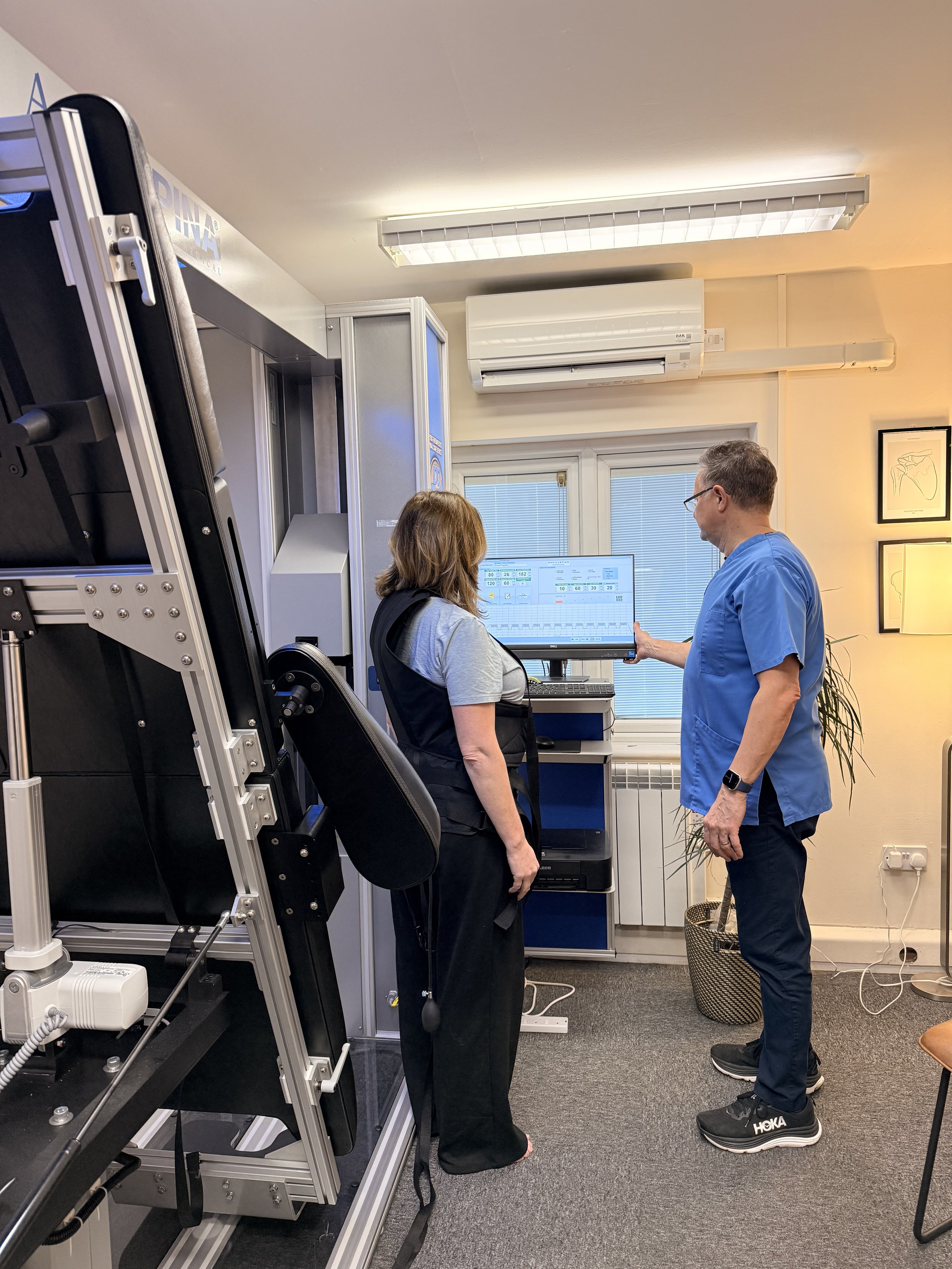
If you would like to discuss whether IDD Therapy might be right for you, we offer a free 30 minute discovery call. Call now on 01264 580280
Typical candidates for IDD Therapy are individuals with back, neck, or leg pain who have tried other treatments without success.
They may be on pain medication, have undergone an MRI scan, and might be considering invasive treatments like injections or, in severe cases, surgery.
MRI Scans and Suitability for IDD Therapy
Before beginning IDD Therapy, it’s important to confirm that treatment is appropriate for your condition. An up-to-date MRI scan is essential, as it allows us to see the underlying cause of your back or neck pain in detail.
We work in partnership with Vista Health, a leading nationwide provider of diagnostic imaging. This means our patients benefit from:
Fast access to MRI scans at convenient UK locations
High-quality imaging that gives us a clear understanding of your spine
Affordable options compared with many hospital-based scans
By teaming up with Vista, we can quickly review your scan results and confirm whether IDD Therapy is the right course of treatment for you. This ensures that your care is safe, appropriate, and based on the best possible information.
If you're experiencing back or neck pain, or symptoms affecting your legs or arms, visit us for a professional assessment to determine the most suitable treatment for you.
Clinic Director Mark Stockwell says:
“Our goal is to get you moving freely again. Certain spinal conditions simply need more than standard hands-on treatment and exercise, having IDD therapy we can help people get back to doing the things they love as part of long term care solution.”
To book a consultation or request a callback: 01264 580280

Common Questions
Does IDD Therapy work?
IDD Therapy has a strong track record of success. Developed in the late 1990s, it is used by a global network of providers, including in the UK. We use established research tools to monitor your progress and make adjustments as needed throughout the treatment programme.
Whilst IDD Therapy may not be suitable for everyone, we expect to see improvement during and after the programme. We'll guide you every step of the way and help manage your expectations.
Is treatment painful?
No, treatment is designed to be completely relaxing. You stay fully clothed during the session, and while the therapy is strong, many patients find it so comfortable that they fall asleep.
Is there a treatment programme?
Yes. There is no quick fix for conditions that have developed over time. Our goal is to gradually improve spinal function. Like exercise, you'll undergo a series of sessions that stimulate your body to adapt. Most patients require a structured course of around 20–30 treatments, depending on the severity of their condition and how long it has been present. Some patients may experience rapid improvement, while others may take longer to respond.
How long is treatment?
Each treatment lasts for one hour. We begin with some gentle warming of the lower back for ten minutes. Patients are on the Accu-SPINA for 30 minutes and we may gently cool the treated area for ten minutes.
How many treatments will I need?
Every spine is different, but most people with ongoing back or neck pain will need a full course of IDD Therapy to see lasting results. While some feel improvement after just a few sessions, more persistent or complex problems - especially those being considered for surgery - may take a little longer. The original protocol is for an intensive programme of therapy of 20 treatments over 6 to 8 weeks.
IDD Therapy works by gently decompressing the spine, improving disc hydration, and restoring movement to stiff, compressed segments. Just like building strength through regular exercise, your spine needs time and consistency to respond and heal. We’ll guide you through each step and monitor your progress - and if it’s not helping, we’ll let you know and review other options together.
Are there age restrictions?
Patients must be 18 or older, but there is no upper age limit.
I’ve had an injection - can I still have IDD Therapy?
Yes. We recommend waiting two weeks after your injection to allow it to settle before starting IDD Therapy.
I’ve had spinal surgery - can I still have IDD Therapy?
Yes, as long as there is no metal hardware in your spine. We also recommend waiting six months after surgery before beginning therapy.
What is my next step?
To determine the appropriate treatment for you, please call and book a free IDD Suitability Assessment (in-clinic) consultation.
If you would like to ask a question, just contact us and request a call back. We’ll be happy to assist you.
Tel: 01264 580280
ABOUT US
We, at Hampshire Spine and Joint Clinic specialise in non-invasive pain solutions for patients who have tried other treatments and are seeking to get their lives back. The clinic is conveniently located on the south side of Andover with free on-site parking.
For more information about IDD Therapy visit www.iddtherapy.co.uk
Book an appointment.
You can book an appointment online or call 01264 580280 if you would like to discuss your condition beforehand.
